
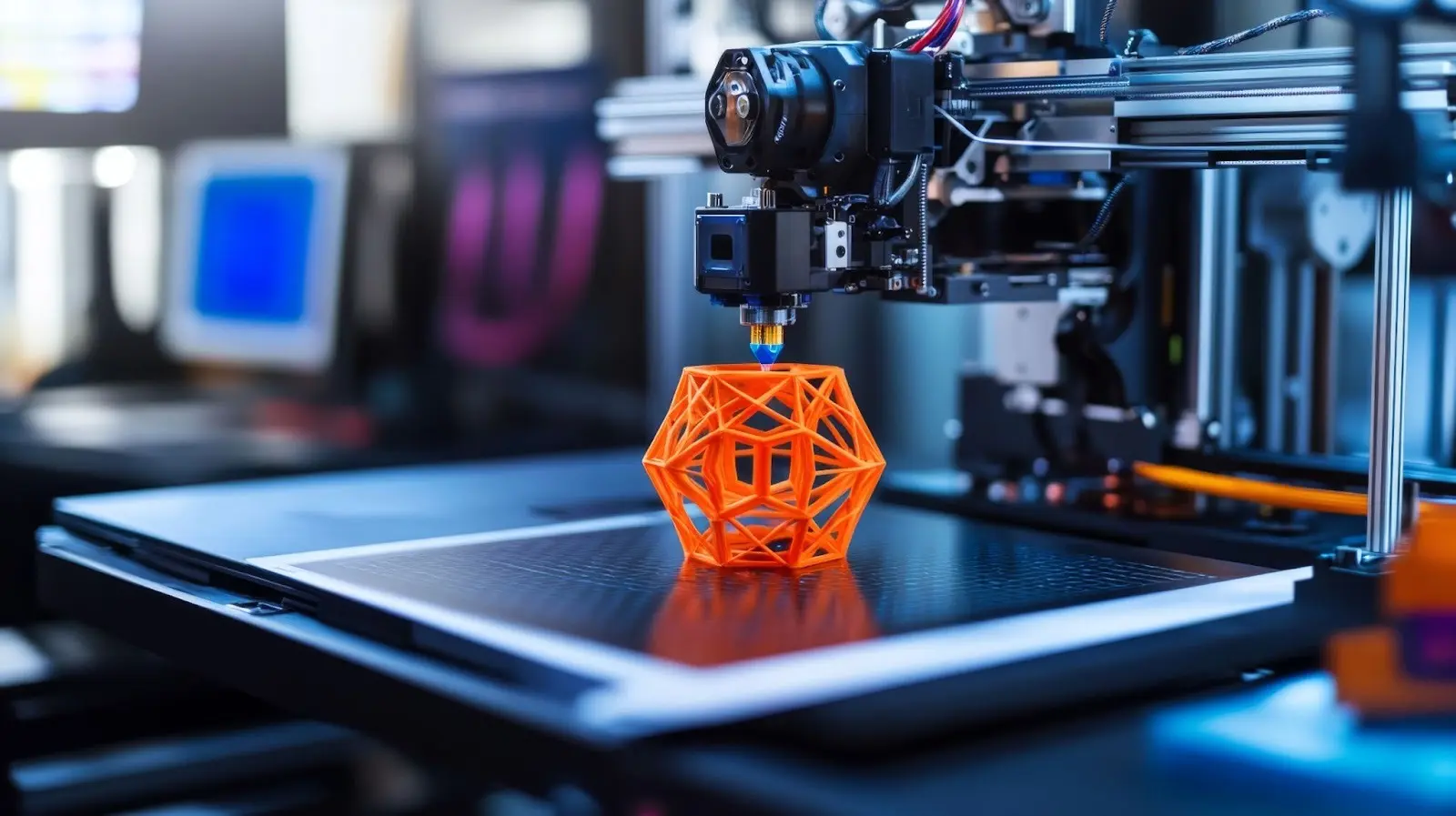
You want parts that fit right the first time, hold up under stress, and show up when promised. That doesn’t happen by luck. Whether you’re testing a prototype or making finished components, your outcome hinges on six factors fully under your control: how you design, which material you pick, the printing method, tolerance calls, surface finish needs, and critically how clearly you talk to your vendor.
Early in your project, you’ll face a fork: do you want 3D printing services near me for lightning-fast turnarounds, or an online 3D printing service offering wider material libraries and lower per-piece pricing? This blog lays out a pre-quote checklist, file-prep tactics, 3D printing cost levers, and quality checks that stop expensive do-overs.
Results-First Project Brief (The Fastest Way to Improve Print Quality)
Before you drag a single STL into an upload window or ping a vendor for pricing, the most powerful move you can make is answering one question: what does “best results” actually mean for this specific part? A tight project brief kills 90% of reprints and endless email threads. Here’s how to write one in minutes.
Clarity up front buys you weeks on the back end. Map your part’s role to metrics you can measure, rank what matters most, and lock in tradeoffs before anything spins up.
Use-case clarity (prototype, tooling, end-use)
Spell out the part’s real job. Is it a visual show-and-tell, a fit test, a load-bearing bracket, or something exposed to heat, chemicals, or sunlight? Each scenario demands its own definition of “good.” Concept models care about looks; snap-fit assemblies obsess over dimensions; structural brackets need strength; medical devices require certifications.
When you lean on a custom 3d printing service, stating this upfront lets them steer you toward the right tech-material combo. Prototypes tolerate rougher finishes; production parts often demand certifications and traceable material lots.
Environment + lifecycle checklist
Walk through the conditions your part will actually see: temperature spikes, UV bombardment, moisture, solvents, repeated flexing, autoclave sterilization, or food contact. Expected lifespan counts too single-use jig or multi-year field deployment? Nailing these details early points you toward the right material and process, so you don’t end up with fragile SLA resin when you truly need heat-resistant nylon.
Feature priority ranking
Rank these in order: appearance, dimensional precision, mechanical toughness, turnaround speed, and budget. You cannot max out every dimension on a tight timeline and wallet, so choose your top two or three and flag where you’ll compromise. Locking this in before the first print stops the dreaded “looks amazing but won’t assemble” or “fits perfectly but melted outdoors” scenarios that force expensive reprints.
Choosing the Best 3D Printing Service for Your Part (Scoring Framework)
Now that you’ve nailed down success criteria, the next hurdle is: which shop can actually deliver? Not every 3D printing vendor is built the same. Here’s a scoring lens to sort serious partners from garage hobbyists.
Skip the race to the bottom on price. Evaluate on capability range, pricing transparency, and proven repeatability.
Capability scorecard (beyond “prints in PLA”)
Survey their tech stack: FDM/FFF, SLA/MSLA, SLS, MJF, DMLS/SLM, binder jet, PolyJet. Dig into their material roster; do they publish datasheets and track material lots? Do they handle post-processing in-house: vapor smoothing, dyeing, tumbling, bead blasting, CNC machining, tapping, heat-set inserts, annealing?
Metrology capability separates pretenders from pros. Calipers work for loose tolerances, but CMM or optical scan reports prove they can verify tight specs. Interesting aside: across all timepoints in a recent bioprinting study, cells stayed highly viable at roughly 99%, proving that when process variables are locked down, outcomes can be rock-solid and consistent.
Local vs remote: 3D printing services near me vs online 3D printing service
Local shops shine when you need rapid iteration, face-to-face consultations, same-day pickup, or touchy IP conversations. Real value lives in walking over and examining a part together.
Online 3D printing service platforms typically deliver broader process variety, deeper material catalogs, better unit economics through smart build-plate nesting, scalable capacity, and instant automated quoting. A hybrid workflow makes sense: start local for fast fit-and-function loops, then shift online once design freezes and you need repeatable volume pricing.
Proof signals that reduce risk
Hunt for actual part photography, not glossy 3D renderings. Industry-specific case studies prove they’ve tackled challenges like yours. Look for documented tolerances, material certs (UL, FDA class, biocompatibility), and customer feedback focused on accuracy and communication not merely “shipped fast.” Most important: ask about their revision policy and who absorbs cost when a part fails spec. Confident vendors don’t dodge that conversation.
Print-Ready CAD That Produces Reliable Results (Design Rules That Prevent Failures)
Even the best 3D printing service on the planet can’t rescue a design that ignores additive manufacturing fundamentals. To unlock your vendor’s full potential, your CAD geometry needs to obey proven rules that stop failures before layer one.
Strong results start in CAD, not in the slicer. Honor minimum-wall guidelines, design self-supporting angles, and flag critical dimensions explicitly.
Wall thickness, ribs, and fillets that print cleanly
Minimum wall thickness shifts by process: FDM might want 1–2 mm, SLA can go thinner (0.5 — 1 mm), SLS/MJF typically needs 0.6 — 1 mm depending on scale. Add ribs instead of bloating wall thickness ribs cut warping, sink marks, and waste while boosting stiffness. Use fillets on internal corners to ease stress concentration and smooth surface transitions; sharp corners can trigger print defects.
Overhangs, bridges, and support strategy
Design for self-supporting geometry wherever possible chamfers and teardrop cutouts for horizontal holes eliminate support scars inside functional features. When overhangs are unavoidable, consider splitting the part so cosmetic faces print upward, away from support marks. Smart splits also trim machine time and finishing labor.
Holes, threads, and assembly features
Intentionally undersize holes by 0.1 — 0.2 mm if you plan to drill or ream post-print for press fits. For threads, pick your path: printed threads (low-torque, coarse pitch), heat-set inserts (champion for repeated assembly), or tapped metal inserts. Snap-fits and living hinges shine in SLS nylon but turn brittle in standard SLA resins process and material choices matter deeply here.
Materials That Match Performance (Not Just Price)
Perfect geometry means nothing if your material pick can’t survive real-world abuse. Smart material selection isn’t about chasing the cheapest bid, it’s about matching performance demands to resin, plastic, or metal families that won’t crack in the field.
Match polymer families to your actual loads, environment, and finish expectations. Heat deflection, impact toughness, and UV stability vary wildly across materials.
Functional selection map (strength, impact, heat, flexibility)
Common needs map to families: ABS/ASA for impact and moderate heat, PETG for chemical resistance and toughness, nylon (PA12/PA11) for flex and durability, TPU/TPE for rubber-like behavior, PC for high strength and optical clarity, PEEK/PEKK for extreme heat and load. Rigid engineering SLA resins can mimic ABS-like properties, but verify heat deflection versus glass transition temps parts can soften or warp past those thresholds.
Outdoor, chemical, and high-heat readiness
ASA stands up to UV, PA12 resists many solvents, and high-temp resins or annealed nylons tolerate elevated service temperatures. For food-contact or medical applications, you’ll need biocompatible grades and documentation to back it (FDA Class I–VI datasheets, biocompatibility certs). Don’t assume all nylons or resins behave alike demand the datasheet.
Wrapping Up Your Path to Better Printed Parts
Consistent, high-quality outcomes from any printing vendor start long before you upload a file. Define success metrics clearly, pick vendors on capability and transparency, prep geometry that respects additive fundamentals, match materials to real-world stress, and communicate tolerances and finish expectations in plain language.
Control costs through intelligent design moves and batch tactics, not by skipping QA. When you treat 3D printing like real manufacturing, not a weekend hobby, you’ll get parts that work the first time, every time.
Common Questions About Getting Great 3D Printed Parts
How do I estimate 3D printing cost before uploading a file?
Most online services give instant quotes from STL uploads. For rough planning, cost scales with bounding-box volume, material choice, and post-processing expect $50–$500 for typical prototypes.
Is it safer to use 3D printing services near me for tight deadlines or sensitive IP?
Local vendors offer same-day pickup and face-to-face IP talks. For sensitive designs, confirm NDA coverage and probe file-handling policies regardless of location.
Which file should I send to an online 3D printing service: STL, 3MF, or STEP?
Upload STEP for engineering review and quoting if accepted; STL or 3MF for actual printing. Always verify units and scale in a separate drawing or PDF.