
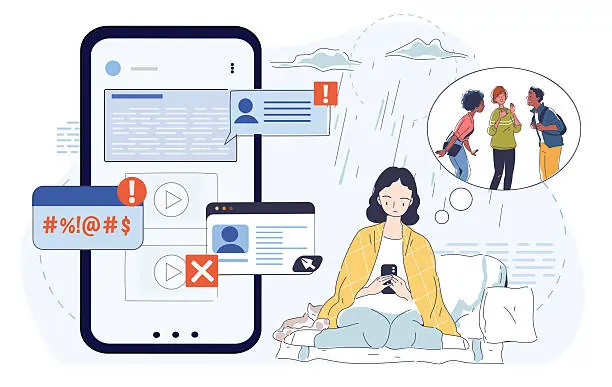
Today, people rely heavily on digital platforms to connect, communicate, and build relationships of all kinds. Social networks, messaging apps, and interactive platforms promised to simplify human interaction and make meaningful connections easier than ever. At first glance, it seemed like a breakthrough — technology would remove barriers and bring people closer.
However, the reality often feels different. Instead of meaningful engagement, many users experience repetitive interactions, shallow conversations, and a sense of dissatisfaction. What was meant to simplify communication has, in many cases, turned into a tiring cycle of scrolling, filtering, and short-lived exchanges. So why does this gap between expectation and reality exist?
The Illusion of Endless Options
Modern platforms offer an overwhelming number of choices. Whether it’s people, content, or communities, there is always something new to explore. While this seems like an advantage, it often creates the opposite effect.
When users are presented with too many options, decision-making becomes harder. Instead of committing to one interaction or connection, people keep searching for something “better.” This leads to a pattern of constant switching, where nothing feels good enough.
Psychologists call this the “paradox of choice.” More options don’t necessarily lead to better outcomes — they often create doubt, anxiety, and dissatisfaction. Users begin to focus on minor flaws and overlook genuine opportunities for meaningful interaction.
Algorithms vs Real Human Experience
Most digital platforms are driven by algorithms designed to maximize user engagement. Their goal is simple: keep you active for as long as possible. To achieve this, they show content and profiles that match your previous behavior, creating a highly personalized — but limited — experience.
This leads to what’s known as a “filter bubble.” You are repeatedly exposed to similar types of people and content, reducing the chances of discovering something truly different or valuable. Over time, this can make interactions feel predictable and less authentic.
Instead of encouraging genuine connections, the system often prioritizes activity — clicks, swipes, and time spent — over quality.
Common Frustrations in Online Interaction
Many users encounter issues that reduce trust in digital platforms. These include fake profiles, misleading identities, and inconsistent communication. Some individuals present an idealized version of themselves, while others engage without genuine intent.
Another common issue is sudden disengagement — conversations that start with interest but end without explanation. This lack of closure can leave users confused and frustrated, especially after investing time and attention.
Such experiences gradually reduce confidence in online interactions and make users more cautious, sometimes overly critical.
A Shift Toward Real-Time Interaction
As a response, some users are turning to more direct and transparent forms of communication. For example, platforms offering real-time video interaction — such as chat roulette with women — reduce the chances of misrepresentation and create a more immediate, human experience.
Seeing facial expressions, hearing tone of voice, and reacting in real time brings back elements of natural communication that are often lost in text-based environments. This format helps users quickly assess comfort and authenticity, saving time and reducing misunderstandings.
The Business Behind Engagement
It’s important to understand that most digital platforms operate as businesses. Their success depends on user activity, not necessarily user satisfaction.
Features like limited access, premium upgrades, notifications, and ranking systems are designed to keep users engaged. The longer you stay, the more value the platform generates — whether through ads or subscriptions.
As a result, the system is often optimized to maintain interest rather than deliver quick, meaningful outcomes. This can create a loop where users keep returning without achieving what they originally intended.
Where the Real Issue Lies
The gap between expectations and reality isn’t caused by platforms alone — user behavior also plays a role.
In a fast-paced digital world, people are привык (used to) quick results and instant gratification. This mindset often carries over into online interactions, where users make rapid judgments based on limited information.
Instead of investing time to understand others, many rely on surface-level impressions. This makes it easier for algorithms to influence decisions and harder to build genuine connections.
Finding a Better Balance
Digital platforms are tools — and like any tool, their impact depends on how they are used. While they offer convenience and access, meaningful interaction still requires patience, attention, and authenticity.
Being more intentional about how you engage, limiting overuse, and choosing platforms that encourage real interaction can make a noticeable difference.
In the end, technology can support human connection, but it cannot replace the effort and sincerity that real relationships — of any kind — require.
Read more: Stability As a Launchpad, Not A Cage
How Online Entertainment Is Becoming a Popular Social Activity
The Ultimate Guide to Online Casino Platforms: Top Picks and Jackpot Reviews