
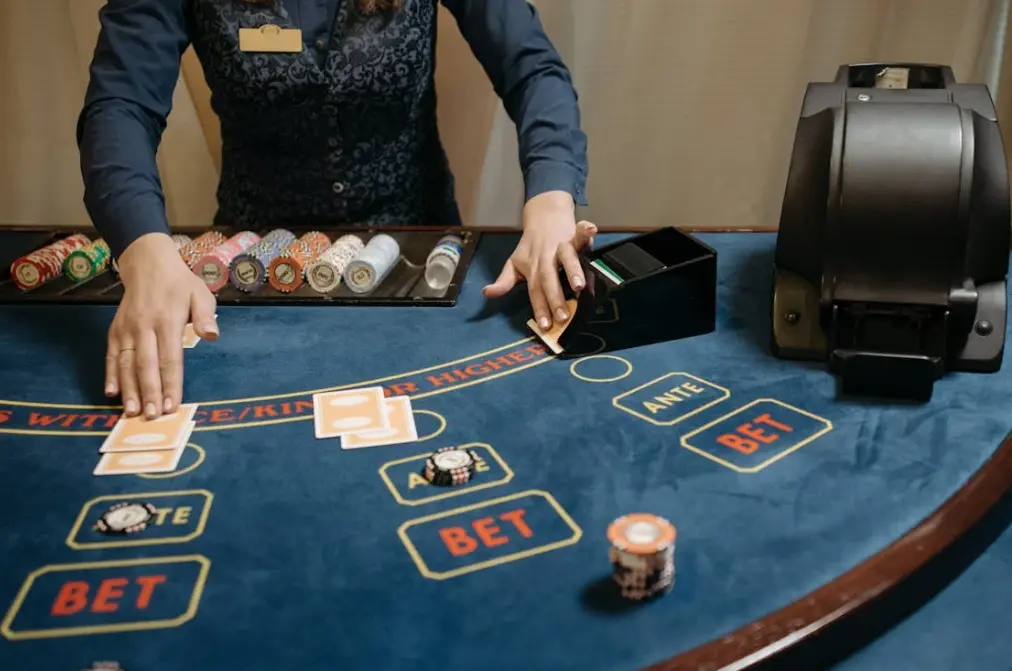
Live dealer games narrow the distance between online play and a physical casino table. A real dealer handles real equipment on camera, which adds human rhythm and a visible process. The experience feels more authentic when the table is easy to read, the pace feels natural, and the social layer resembles a shared table rather than a solo interface.
Realism usually comes from a small set of design and production choices. Camera work, studio layout, audio, and interface decisions all shape whether the session feels like observing a live table or interacting with one. The most convincing platforms make these elements feel seamless, so attention stays on the action instead of the technology.
Studio and Camera Design for a Table-View Experience
A live dealer table feels closer to an in-person session when the studio looks professional, and the table is framed like a seated perspective. Balanced lighting keeps card faces, roulette pockets, and chip placement clearly visible without harsh glare. Background design is equally important, ensuring the set feels realistic and uncluttered. Clean branding and a realistic layout reduce the sense of a staged set.
Camera coverage contributes heavily to realism. Multiple angles that shift at the right moments recreate how attention naturally moves at a physical table. A wide shot establishes context, while close-ups support clarity during dealing, spinning, or revealing outcomes.
When camera switching is smooth and predictable, it supports focus. The table feels stable and readable, which is a large part of what makes the experience feel grounded and real.
Dealer Presence and Social Interaction That Feels Human
The dealer is the most visible human element in a session, so professionalism and clarity shape the experience. A dealer who speaks clearly, moves at a steady pace, and handles chips and cards confidently makes the game feel structured and familiar. Small gestures, like acknowledging a winning hand or nodding politely during a pause, add realism that mirrors a live table.
Chat tools enhance the social aspect when they are integrated cleanly. If players can send quick messages or emojis without the interface feeling cluttered, the session starts to feel like a shared space. Features like moderation and language options help maintain a smooth, comfortable environment on busy tables.
For example, in FanDuel live dealer games, the combination of dealer introductions, on-screen identifiers, and consistent audio mixing makes each table feel like a hosted session. Players see who is dealing, know who is at the table, and experience the flow just as they would in a real casino, rather than interacting with a generic stream.
Interface Design That Matches Real Table Flow
A convincing live dealer experience depends on how the interface supports the natural rhythm of betting and resolving each round. When the betting layout mirrors a real table, decisions become more instinctive. Clear chip values, easy-to-read grids, and straightforward confirmation steps make the experience feel natural rather than a struggle with the interface.
Timers also shape realism. A well-tuned countdown feels like the natural window a dealer allows for bets, rather than a rushed digital prompt. The best interfaces keep essential information visible without blocking the table view, so the live action stays central.
Supplemental panels, such as round history and bet tracking, can support continuity. They recreate the mental tracking that happens at a physical table, where players remember previous placements and outcomes as part of the session experience.
Stream Quality and Timing That Preserve Believability
Video performance is one of the strongest determinants of realism. Smooth motion and sharp detail make the physical elements feel tangible. When the roulette wheel spins fluidly, and card handling looks crisp, the brain treats it more like witnessing a real process than watching a compressed broadcast.
Timing also matters. When the video, the dealer’s actions, and the result display stay synchronized, the session feels coherent. If the feed lags or stutters, the table can feel distant and artificial because the cause-and-effect relationship becomes harder to follow.
Audio quality contributes in a similar way. A clean dealer microphone, stable volume, and minimal background noise create a sense of being present. Sound cues, such as cards hitting the table or the wheel spinning subtly, reinforce that a real physical event is unfolding.
Transparency Features That Reinforce Real-World Process
Live dealer games often feel more real when the platform makes the process easy to understand. Clear rule displays, transparent dealing procedures, and readily accessible table information reduce uncertainty and build trust. The more the physical steps are visible, the less the session feels like a digital shortcut.
Result history tools can also support realism. Seeing prior roulette numbers or recent blackjack rounds mirrors the way players follow a live table over time. When this information is presented cleanly and matches what is visible in the stream, it strengthens the sense of continuity.
Table-specific details such as limits, side bet availability, and dealing rules also shape perception. When these are presented in a straightforward format, the experience feels organized, like a well-run table with clear expectations.
What Makes Live Dealer Games Feel Real
Realism in live dealer play usually comes from production quality plus smart interface design. A professional studio, strong camera work, and clear audio create the sense of a physical table. Dealer presence and social tools add the human layer that recorded or automated games cannot replicate.
When those elements are supported by a clean layout, stable streaming, and transparent table information, the experience feels less like watching a video and more like participating in a live session. The most believable tables are the ones where technology stays quietly in the background, and the live process stays at the center of attention.
Also Read
- :🤖 140+ Robotics Rizz Lines 2025 💡 | AI-Flirty Pick Up Lines for Tech Lovers
- Why Primary Care Doctors Matter More Than People Think
- 3 Key Elements Every Therapist Should Include in Clinical Notes